Wagyu Japanese Restaurant Logo Design Case Study: “Hakobune” | Traditional Calligraphy Logo with a Premium Aesthetic
Wagyu Japanese Restaurant Logo Design Case Study: “Hakobune” | Traditional Calligraphy Logo with a Premium Aesthetic

In this article, we present a logo design case study for the Wagyu Japanese restaurant “Wagyu Kappo Hakobune.”
For Japanese restaurants, especially high-end concepts such as kappo dining, a logo plays a crucial role in communicating the brand’s identity and level of quality. A well-crafted logo can immediately convey tradition, trust, and refinement.
This project focuses on expressing premium quality, Japanese tradition, and a sense of quiet strength through brush calligraphy and symbolic design.
Concept Behind the Logo
The logo was developed based on three core principles:
- A refined and premium presence
- A strong sense of Japanese tradition
- A calm yet powerful brand identity suitable for a Wagyu kappo restaurant
The name “Hakobune” (meaning “ark”) also influenced the concept, leading to a design that feels stable, grounded, and enduring.
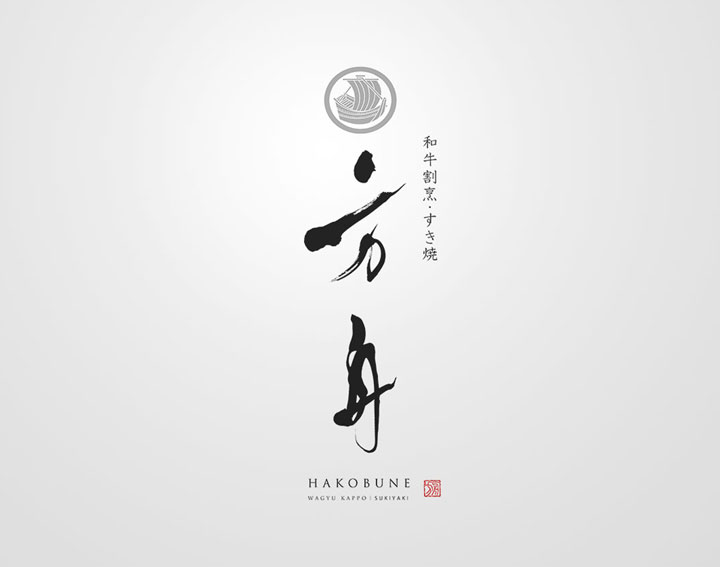
Crest Design: A Traditional Sailing Ship Motif
The emblem (kamon-style crest) is inspired by a traditional Japanese sailing ship.
This motif represents:
- Guidance and direction
- Protection and stability
- A sense of journey and heritage
By structuring the symbol within a circular crest form, the design achieves:
- A formal and traditional appearance
- High visibility and recognizability
- Versatility across applications such as signage, noren curtains, and business cards
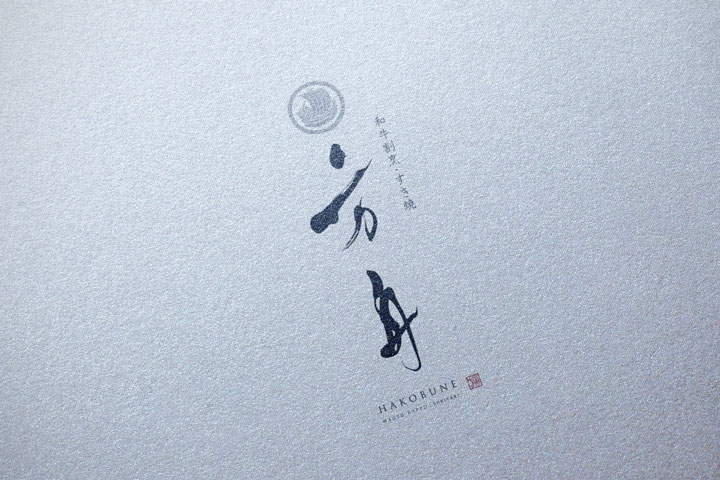
Calligraphy Design: Expressing Tradition Through Brushwork
The logotype “Wagyu Kappo Hakobune” is created using a traditional Japanese calligraphy style.
Key characteristics include:
- Balanced and stable character structure
- Natural contrast between thick and thin strokes
- Subtle ink flow that conveys calmness and control
Rather than being overly expressive, the focus is on elegance, restraint, and authenticity, which are essential qualities for a high-end Japanese dining brand.
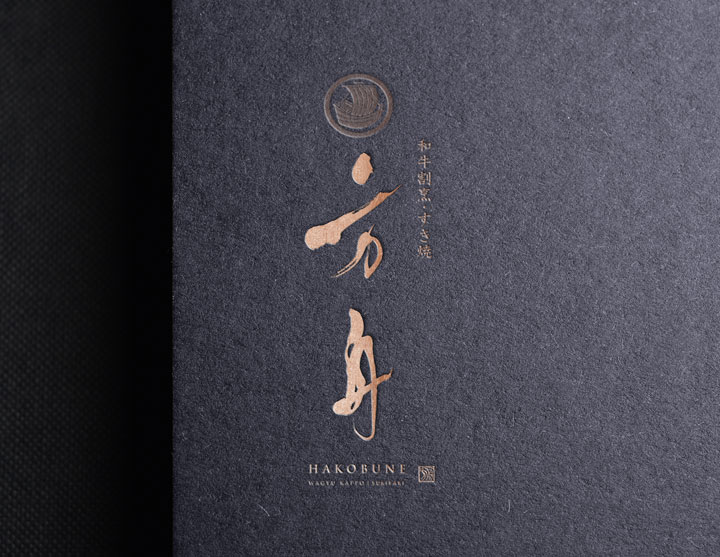
Overall Composition: Balance Between Symbol and Typography
Careful attention was given to the balance between the calligraphy and the crest.
- Primary focus: the logotype (readability and identity)
- Supporting element: the crest (symbolic strength)
The design avoids excessive decoration while maintaining a strong visual presence, resulting in a cohesive and refined logo.
Key Considerations in Japanese Restaurant Logo Design
This project highlights several important points when designing logos for Japanese restaurants:
1. Typography Defines the Brand
Traditional calligraphy styles help communicate trust, authenticity, and cultural depth.
2. The Role of a Symbol (Crest)
A well-designed emblem strengthens brand recognition and adds meaning beyond text.
3. The Importance of Space and Balance
A sense of luxury often comes from restraint rather than complexity.
Conclusion
The logo for “Wagyu Kappo Hakobune” combines:
- Traditional Japanese calligraphy
- A sailing ship-inspired crest
- A minimal and balanced composition
Together, these elements create a logo that reflects both heritage and premium quality.
For those considering a logo for a Japanese restaurant or kappo-style dining concept, this case serves as a practical reference.
Other Introduction
For Those Considering a Logo Design
If you are thinking about creating a logo, please feel free to contact us.
Even if your ideas are not yet fully defined, that is absolutely fine.
We will listen carefully to your requirements and guide you through the process.