
Japanese Logo Design Examples│Branding Case Studies for Businesses
Japanese Logo Design Examples│Branding Case Studies for Businesses

A logo plays a crucial role in shaping a brand’s first impression.
In particular, Japanese logos have a unique ability to convey atmosphere, values, and philosophy through typography, balance, and negative space—often without relying on excessive decoration.
Rooted in Japan’s long tradition of calligraphy and writing culture, handwritten brush-style logos carry warmth, rhythm, and subtle imperfections.
These qualities allow a brand’s story, background, and intention to be communicated intuitively.
“I’m not sure what kind of Japanese logo suits my brand.”
“I like Japanese-style logos, but I can’t visualize how they work in real branding.”
This article aims to serve as a practical reference for those considering a Japanese logo design.
Through real-world examples, you’ll see how Japanese logos function not just as visuals, but as long-term branding tools.
Case 01 | Ramen Restaurant A Japanese Logo Defined by the Power of the Brush
This logo was created with a strong focus on the natural movement and energy of handwritten brush strokes.
Rather than relying on perfectly uniform lines, the design embraces variations in pressure and rhythm—elements that only emerge through the human hand.

The bold calligraphy placed at the center intentionally avoids strict symmetry.
By leaving subtle irregularities, the logo reflects the strength and flow embedded in the name FUJIN.
Supporting text is kept minimal, allowing the main brush lettering to remain the focal point and establishing a balanced contrast between stillness and motion.

Case 02 | Japanese Meat Kappo Restaurant Building Atmosphere Through a Japanese Logo
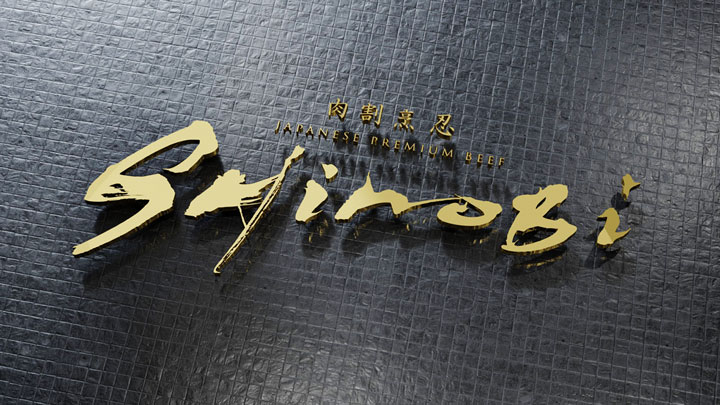
The SHINOBI logo was designed to express restraint and tension—qualities often associated with the word “ninja.”
Instead of over-designing the form, the expression relies purely on the movement of the brush itself.
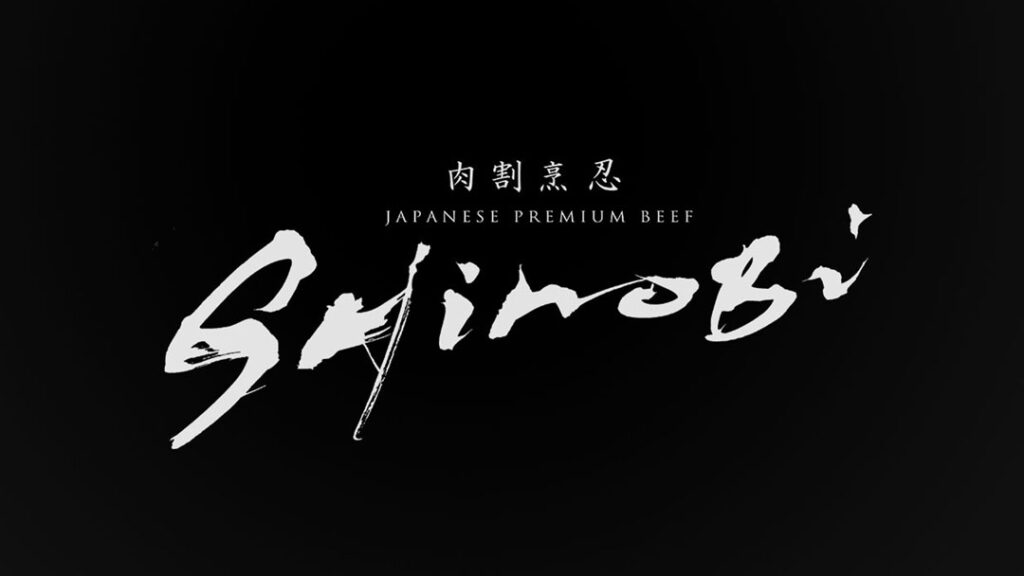
The strokes are intentionally left slightly unrefined, preserving moments where the brush slows, stops, or accelerates.
These details give the logo a quiet intensity that aligns with traditional Japanese aesthetics.
The horizontal layout and carefully placed spacing help balance calmness with subtle movement.
Case 03 | Traditional Japanese Restaurant Preserving Authenticity in a Japanese Logo
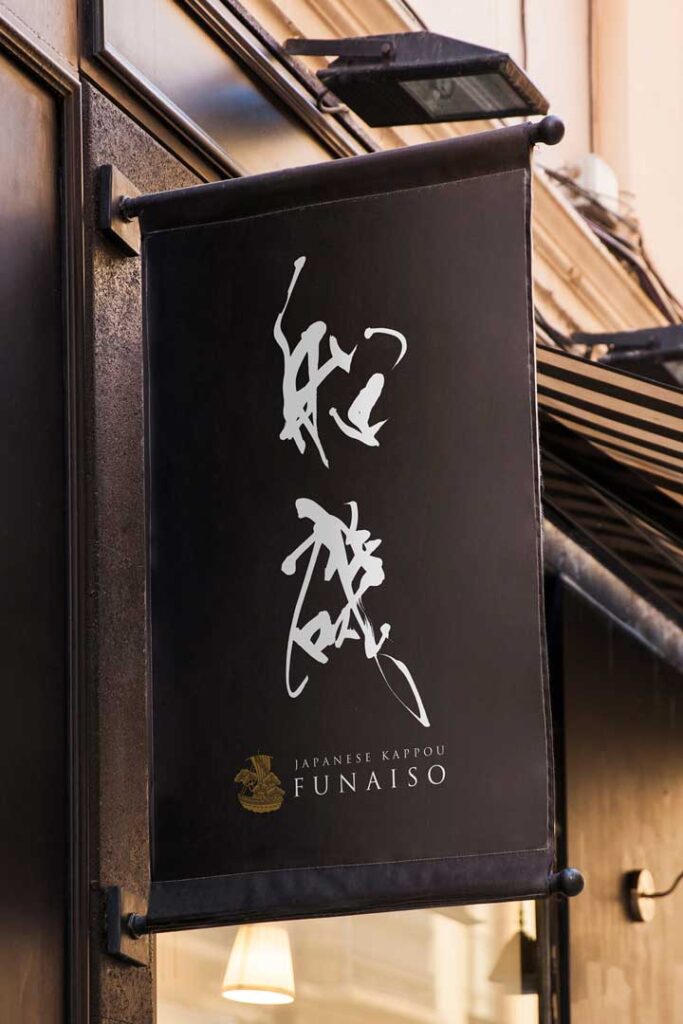
For FUNAISO, clarity and honesty were the main priorities.
While maintaining the expressive quality of brush calligraphy, the logo was carefully adjusted to remain legible and approachable.
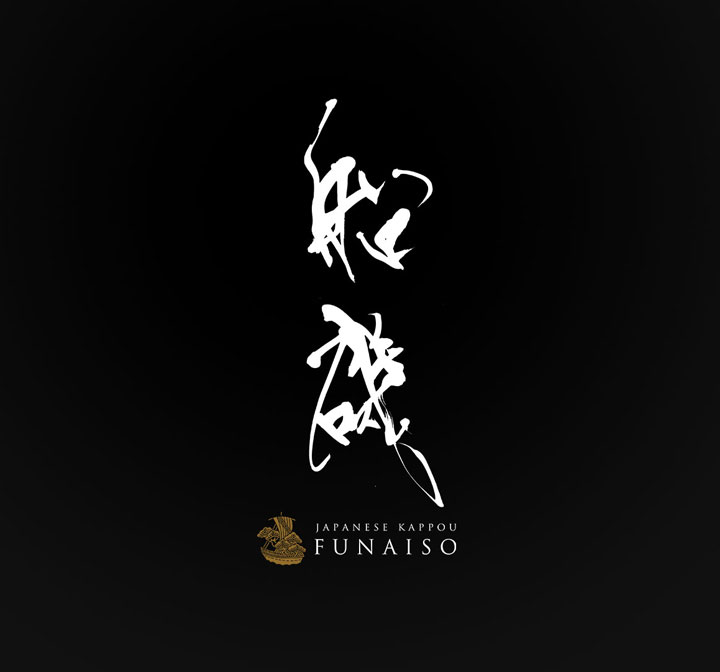
Each stroke was written slowly and deliberately, avoiding unnecessary ornamentation.
Rather than artificially adding texture, natural variations in ink and pressure were retained as they appeared.
This approach reflects one of the strengths of Japanese logos: they quietly convey personality through restraint rather than emphasis.
Case 04 | Izakaya Expressing Heat and Atmosphere Through a Japanese Logo
This logo was designed for an izakaya specializing in sake and grilled dishes.
The goal was to express warmth and liveliness without explicit imagery.
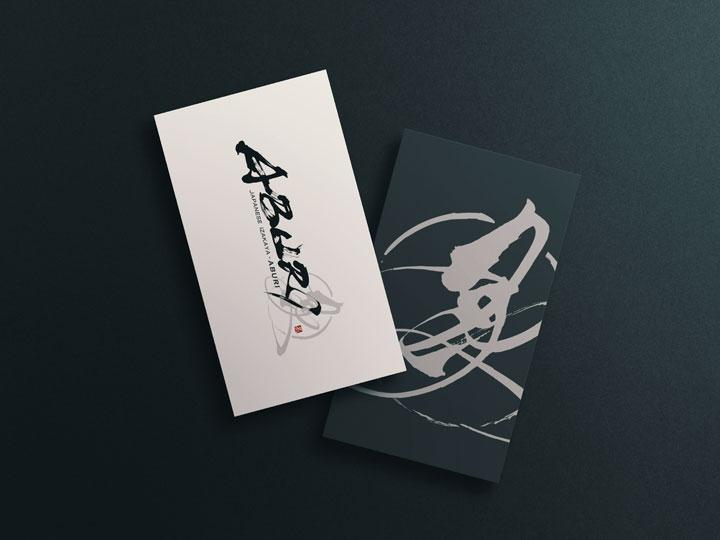
The brush lettering for ABURI captures the feeling of fire and aroma through rough edges, broken strokes, and shifts in pressure.
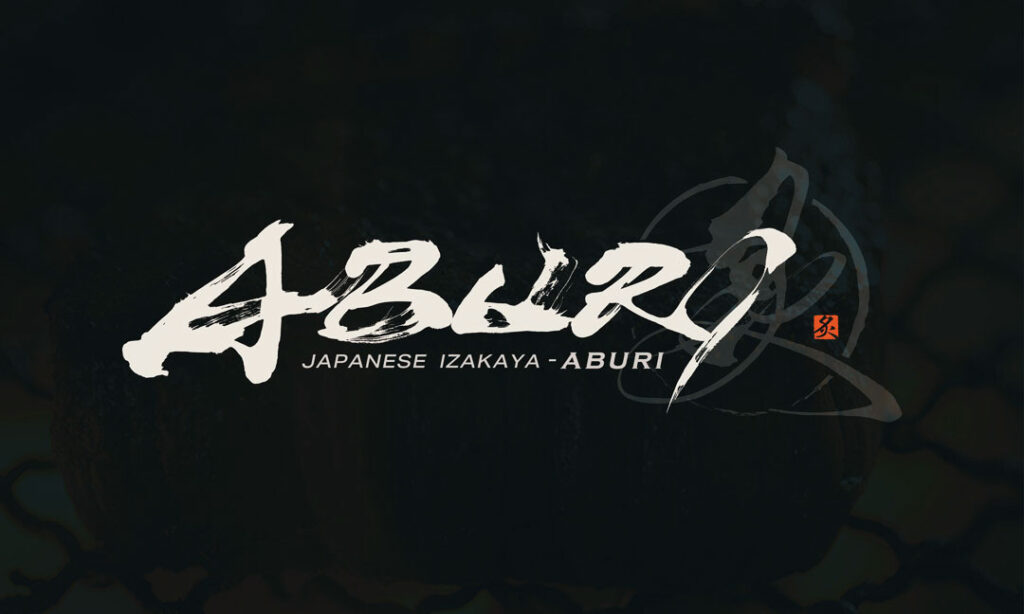
By leaving the strokes slightly uneven, the logo evokes the unpredictability of charcoal flames and the movements of a chef at work.
The composition also allows the logo to adapt naturally across signage, menus, and digital media.
Case 05 | Hair Salon A Minimal Japanese Logo for Everyday Use
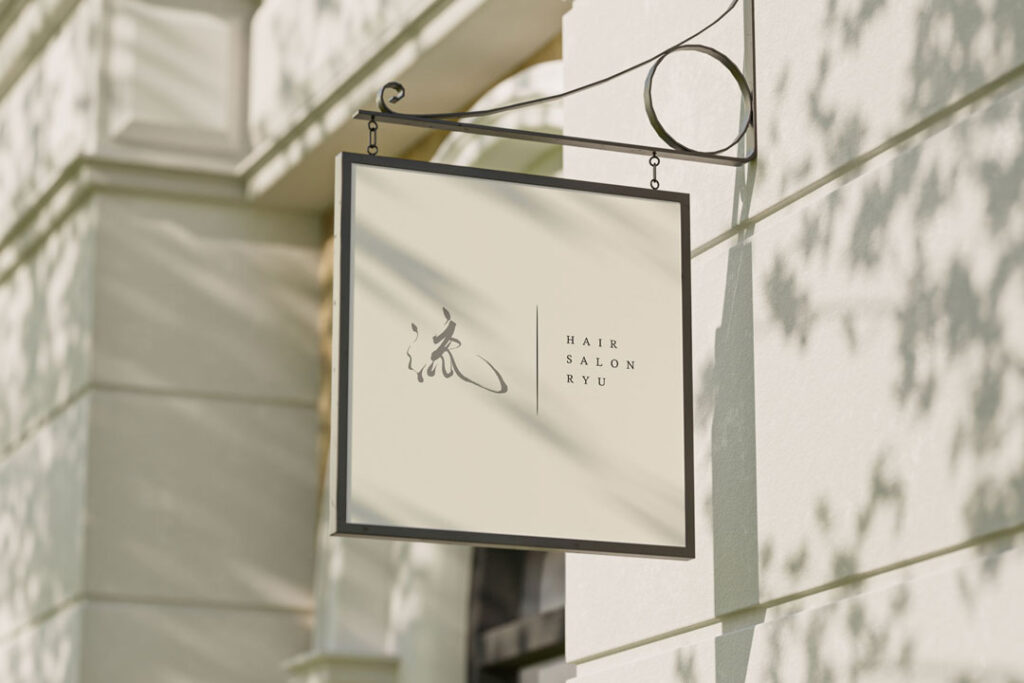
The HAIR SALON RYU logo was created with simplicity and longevity in mind.
Rather than emphasizing boldness, the brush character 流 (RYU) focuses on gentle flow and subtle variation.
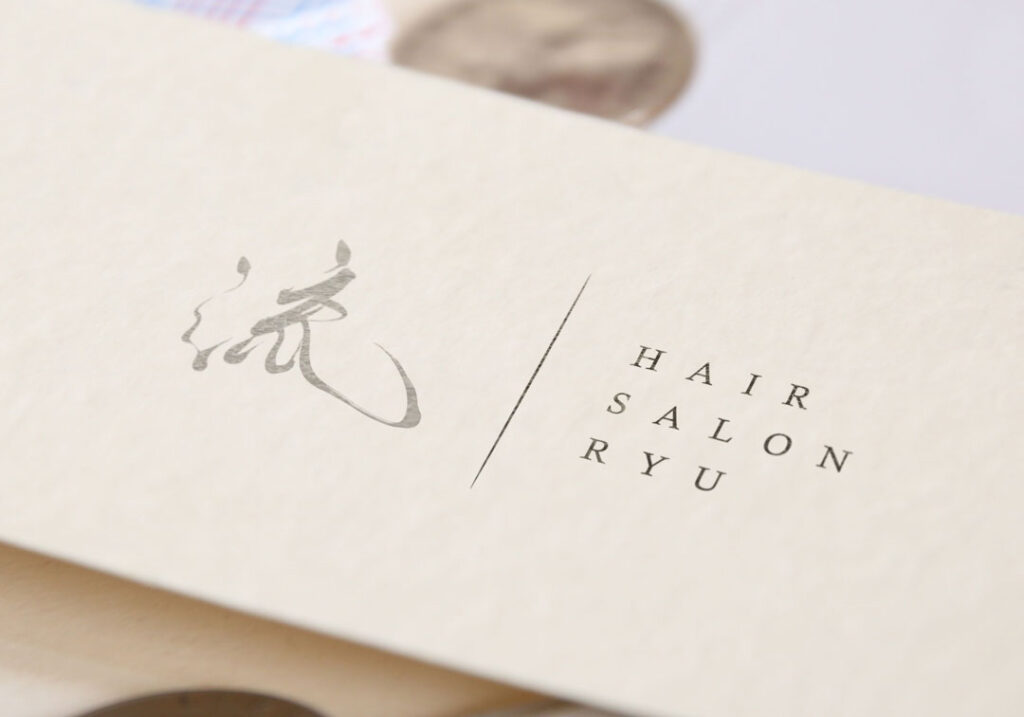
Japanese logos are often associated with strong visual impact, but in this case, restraint was intentional.
The aim was to create a mark that feels calm and familiar over time.
The Roman letters were selected to complement the calligraphy quietly, allowing Japanese and Western elements to coexist naturally.
Case 06 | Creative Production Company Supporting Brand Identity Through a Japanese Logo
The character 響 (HIBIKI) conveys the idea of resonance—sound and emotion spreading outward.
To express this concept honestly, handwritten brush calligraphy was chosen as the foundation.
The natural fluctuations in ink density and line weight introduce warmth that cannot be replicated digitally.
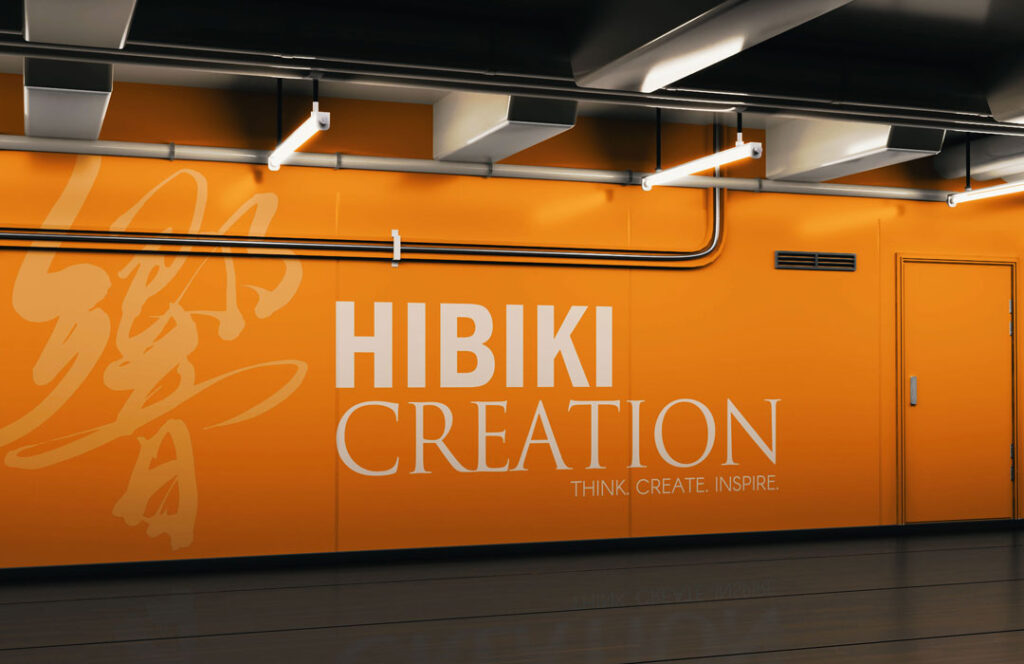
Rather than pursuing perfection, the design values the presence of the human hand.
At the same time, the English text HIBIKI CREATION uses a clean, readable typeface to maintain clarity and balance.

Conclusion | The Value of Japanese Logos in Branding
A Japanese logo grows with a brand.
Over time, it becomes familiar—appearing consistently across signs, printed materials, websites, and packaging.
Because a logo is used for years, not months, choosing a Japanese logo means entrusting meaning and identity to typography itself.
Through subtle expression rather than explanation, Japanese logos offer a powerful and lasting approach to brand communication.
If this article helps you reflect on
“What kind of Japanese logo truly suits my brand?”
then it has fulfilled its purpose.